A recruiter spends just a few seconds on an IT candidate's LinkedIn profile before deciding whether to read on or close the tab. In those seconds, your profile either hooks them or gets lost among hundreds of others. Below: what a recruiter sees first, the skeleton of a solid IT profile structure, and what's new on the COScafe platform this week.
How long people actually look at your profile
A recruiter opens your CV only after you've applied. A LinkedIn profile is often viewed even before that — when recruiters are actively sourcing candidates by skills. According to a survey of recruiters, 76.4% of them search for candidates by the skills listed in the job ad — so your profile has to "catch" those words before anyone even finishes reading your job title.
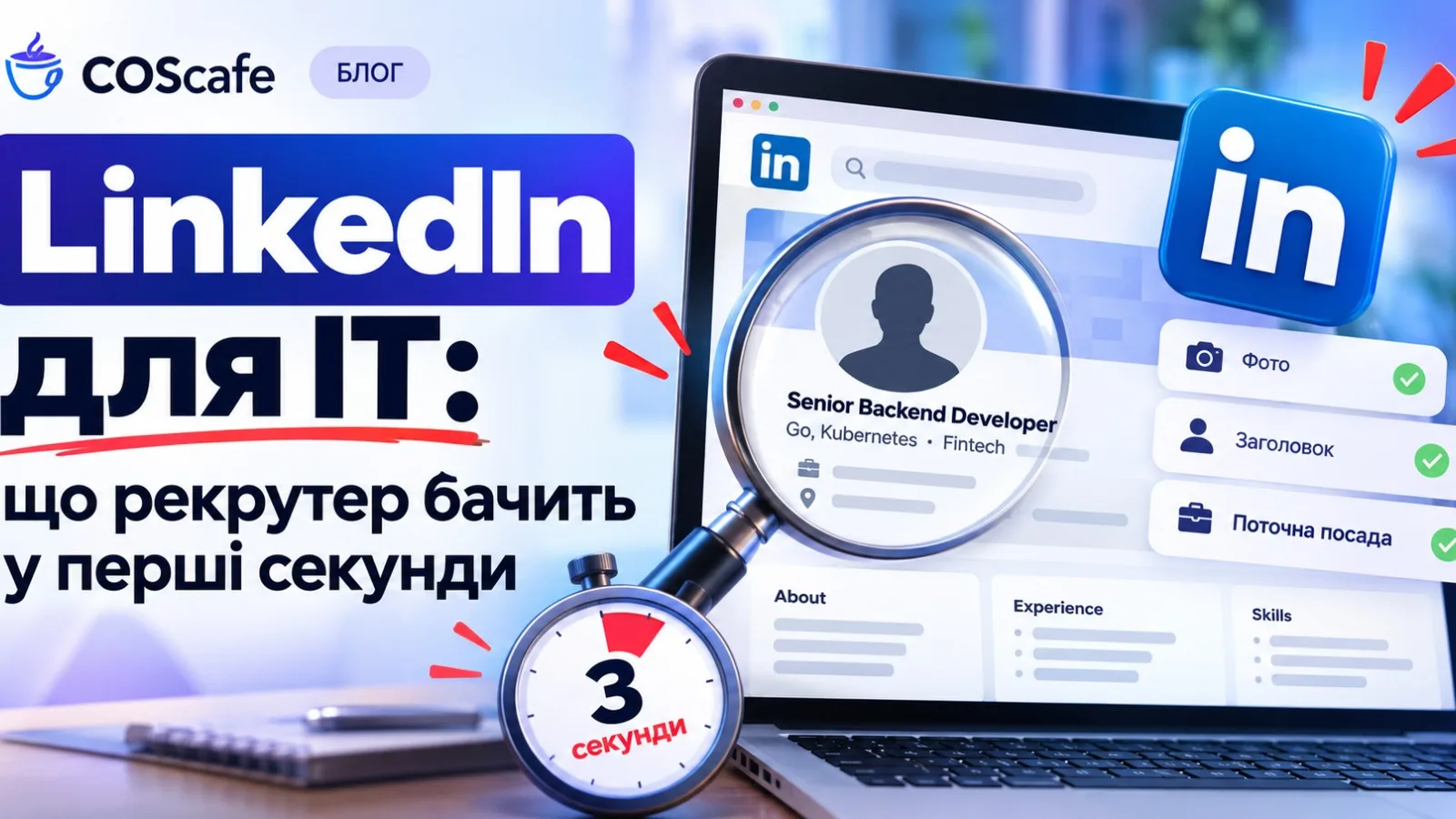
The first few seconds of a view come down to your photo, headline, and current role. Everything else — About, experience, recommendations — only gets read if those three elements landed.
What a recruiter sees in the first few seconds
Three elements decide whether your profile gets read further:
- Headline — not the job title from your diploma, but a specific role + stack + level. "Senior Backend Developer" says less than "Senior Backend Developer · Go, Kubernetes · Fintech."
- Photo — a recruiter will often skip a profile with no photo entirely, without reading any further.
- Current role and company — this signals your level and context without a single click into your CV.
An example LinkedIn profile structure for IT
We won't show you someone else's full profile here — every profile is unique to the person and the market. Here's the skeleton of the blocks that actually get read, with one sample line for each:
- Headline: Senior Backend Developer · Go, Kubernetes · Fintech, 6 years
- About: 2–3 sentences — what you do, in which teams, with what results (no generic filler like "goal-oriented professional")
- Experience: for each role — 2–3 lines focused on results, not a list of duties
- Skills: the key technologies straight from the job ad you're interested in, listed first
On the COScafe platform, this skeleton isn't filled in by hand: your LinkedIn profile is generated from your answers to 32 positioning questions — the same ones that shape your CV.
Why "just fill in every field" doesn't save you
LinkedIn gives you a green profile-completeness meter — and that's a trap. A profile can be 100% complete and still stay invisible if it doesn't contain a single word from the jobs you're searching for. Completeness is about the LinkedIn algorithm. Visibility in a recruiter's search is about the candidate's words inside the profile.
LinkedIn ranks recently updated profiles higher in search — one more reason not to leave your profile untouched for years.
Recording: a free livestream about LinkedIn
On why LinkedIn matters in IT — the recording of the "LinkedIn for IT" livestream is already on the channel.
And one more reason to check it out: on the COScafe platform, updating your LinkedIn profile takes a minute. With the Quarterly or Lifetime plan, it's worth doing every few months so your profile stays "fresh" and recruiters find it faster. More on the plans in the video "How to Choose a COScafe.com.ua Plan."
Platform updates
Showing off: new features on the platform
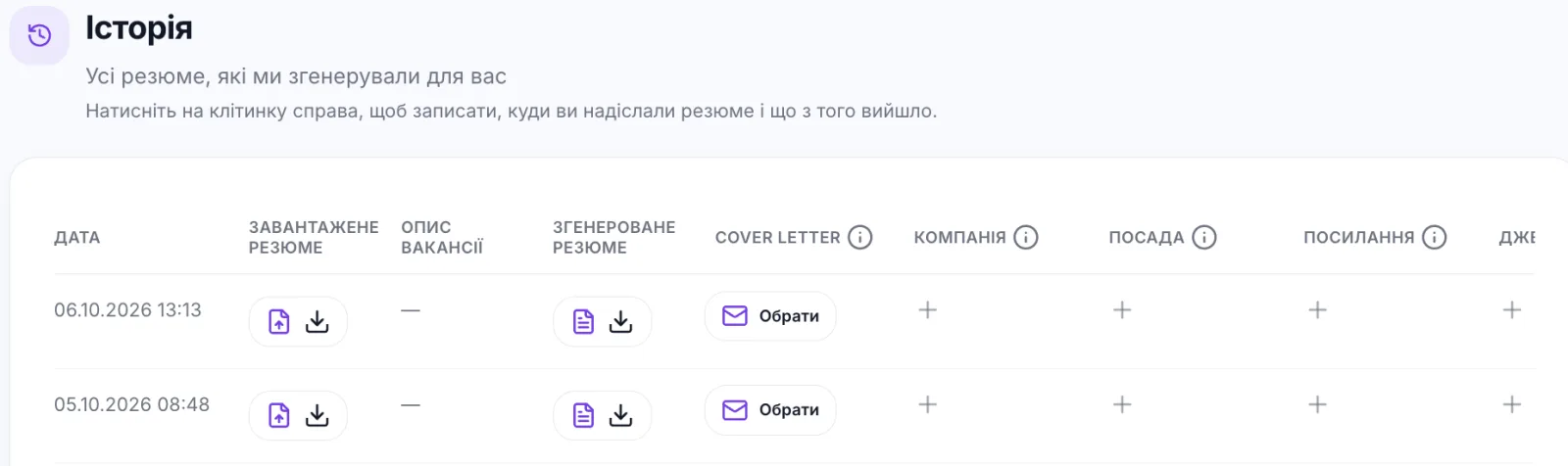
A year or two later, the job search repeats. On LinkedIn — an old role you left long ago. In your CV — a different version of your experience than the last recruiter saw. Which version you sent to a big company and which to a startup — you can't even remember. So this week we updated two things at once.
The "History" section now shows the entire application journey for a job in one place: which CV you uploaded, which CV and cover letter you generated, and which company and role you applied to.
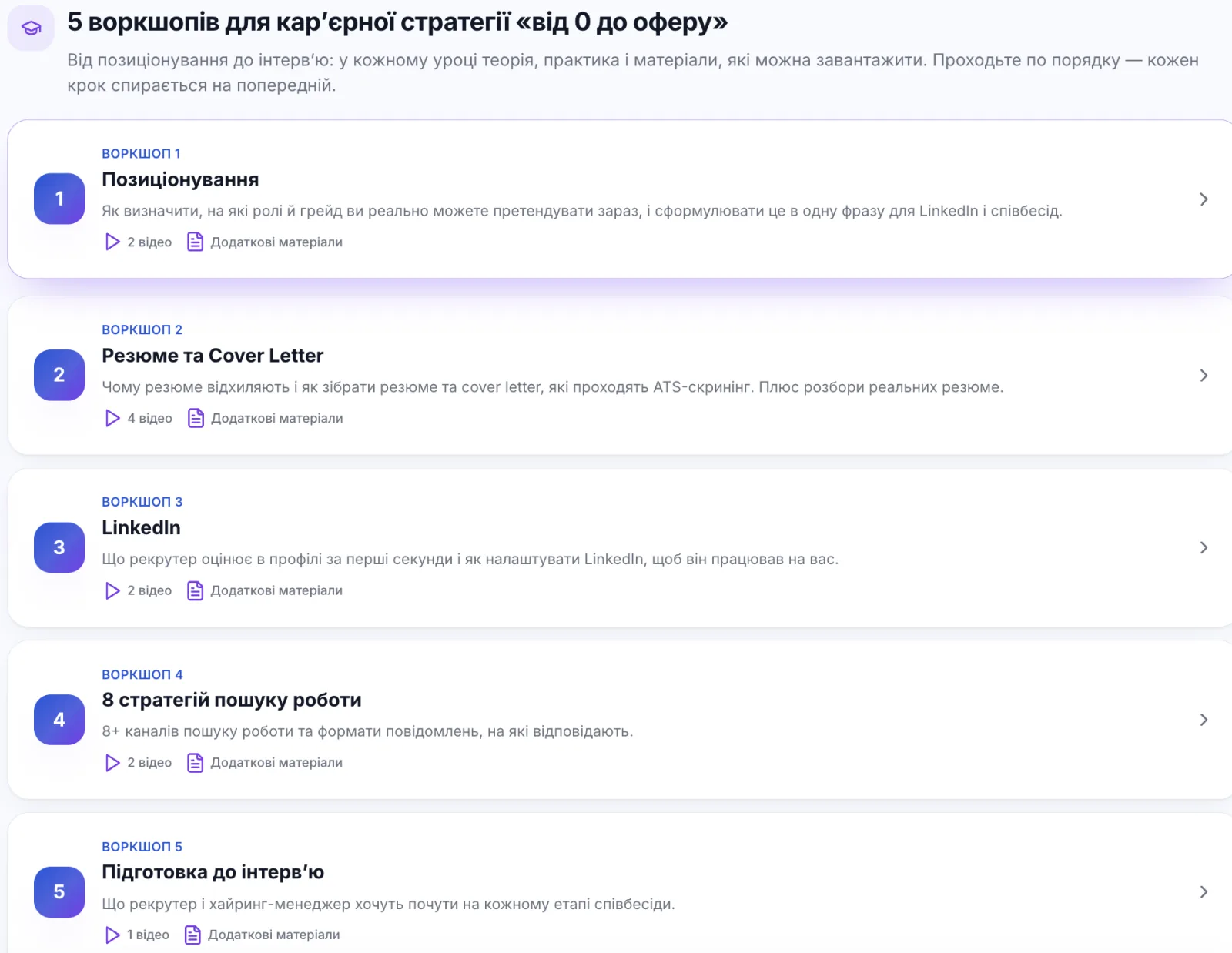
And the Lifetime plan now includes 5 career-strategy workshops, "from 0 to offer" — positioning, CV and cover letter, LinkedIn, 8+ job search strategies, and interview prep. Each one has theory, practice, and downloadable materials.
What's happening in the market: AI and hiring this week
On the DOU forum there's a live diary of a senior developer's job search in autumn 2026 — and over the past week it surfaced a concrete figure: some jobs get 100+ applications within a few hours of being posted (DOU, forum, thread "Live job search in autumn 2026").
A survey of candidates and HR professionals showed that 74% of candidates already edit their CVs with gen-AI (candidate and HR survey, September 2026, PR Newswire). When AI phrasing shows up in nearly every other CV, recruiters stop reacting to it — which is why only 16% of recruiters fully trust AI screening without a human check: they read the actual text rather than relying on what an algorithm filtered. The takeaway is simple — generic AI output has become the norm, and on its own it no longer makes anyone stand out, whether in a CV or on LinkedIn.
For Ukrainian candidates with hardware and embedded experience, here's a fresh hiring signal: German defence-tech companies have scaled up their teams in Ukraine (Quantum Systems — from 80 to 120 people, ARX Robotics and Roboneers merged into ARX Industries with production in Ukraine and Germany) (EU-Startups, 05/10/2026).
Frequently asked questions
Do I really need LinkedIn if I find jobs through my network?
Even then, your profile works as a second business card: a recruiter or a contact recommending you will almost always open LinkedIn to double-check your experience before passing your details along.
How long does a recruiter actually look at a profile?
A first impression forms in a few seconds — from your headline, photo, and current role. The full profile only gets read if those elements already caught their interest.
What should I write in the "About" section if I don't have impressive numbers?
Numbers aren't a must. Specifics are enough: what problems you solved, the scale of the team or product, and what actually changed as a result of your work.
How is a LinkedIn profile different from a CV, and can I just copy the same text over?
A CV is read by a person or a system already considering you for a specific job — which is why on the COScafe platform it's regenerated for each vacancy. On LinkedIn, you're found by people who know nothing about you yet, and a single profile isn't tailored to each job separately: it's built from your answers to those same 32 positioning questions and updated every few months so it stays "fresh" in search.