
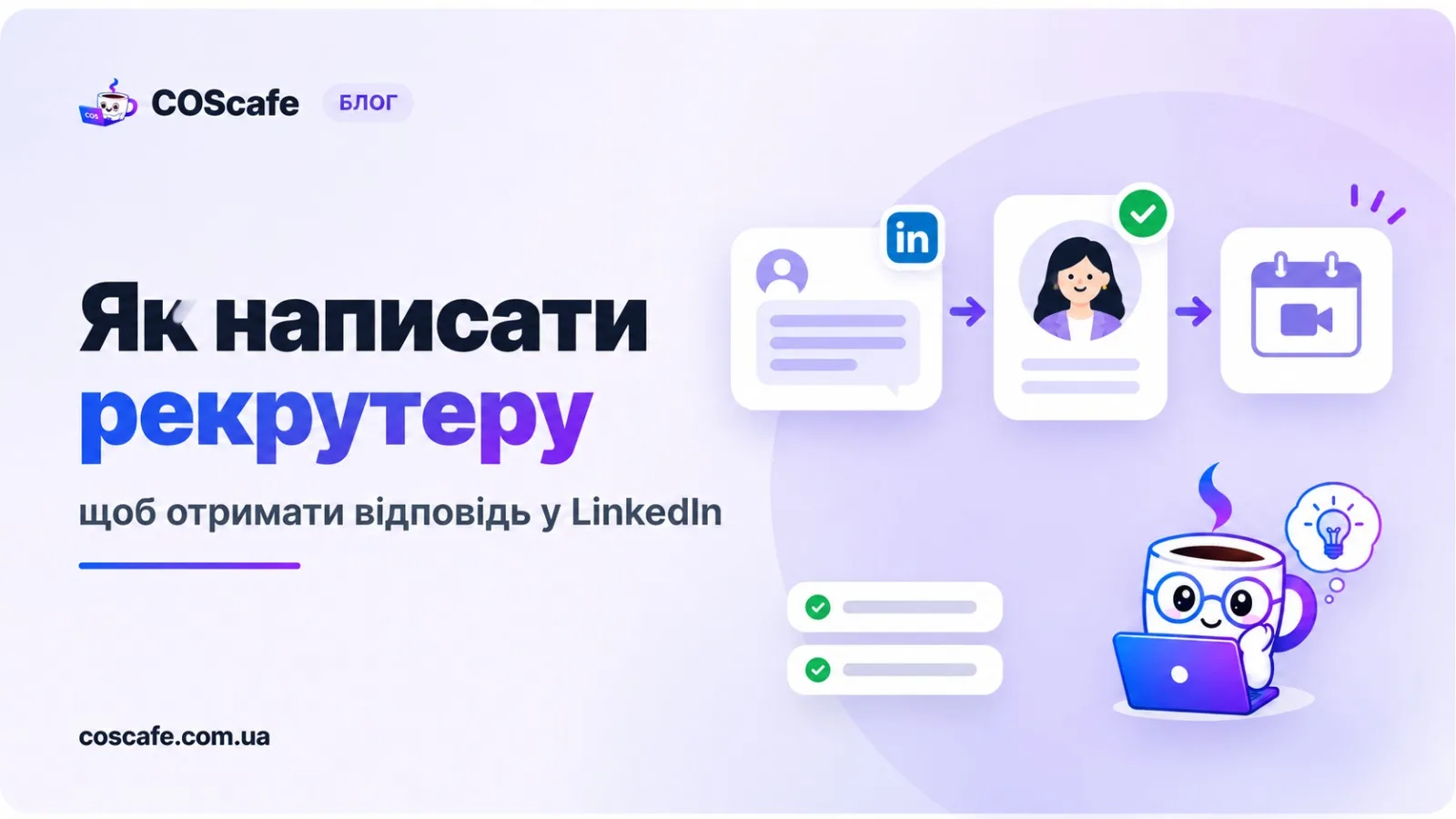
The recruiter hiring for your dream job increasingly isn't waiting for applications — they open LinkedIn and message the person they've already found first. Here's how to become one of those people recruiters reach out to first.
You send off one more job application and wait. Meanwhile, the recruiter hiring for that same role opens LinkedIn and messages someone first — someone they've already found. According to Gem (2026), direct sourcing accounts for 11% of all hires companies make, even though it makes up just 2.6% of applications in the system. The difference comes down to who's easy to find and easy to start a conversation with.
New podcast episode: "How do you build a career as a career switcher? How do you change professions?" —
Why applying is no longer the shortest path
When Ukrainian companies open roles in Poland, recruiters at N-iX report that around 90% of those roles are filled through direct sourcing on LinkedIn — the recruiter finds the profile and messages first, rather than waiting for someone to apply (DOU survey, August 2026). For those same roles, SoftServe also makes active use of No Fluff Jobs and Just Join IT, not just LinkedIn.
Applying still makes sense. But a candidate who's easy to find and easy to start a conversation with lands in a far narrower, far more effective funnel — the one where the recruiter reaches out first, instead of picking from a whole queue of applicants.
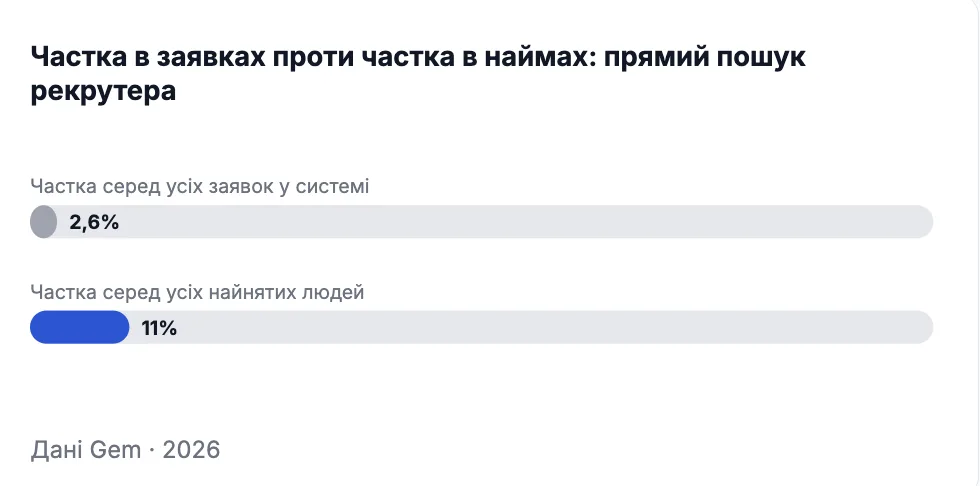
Share of applications vs. share of hires: direct sourcing by recruiters
Gem data · 2026
The LinkedIn message that gets a reply
Pin analyzed over 4 million LinkedIn messages sent by recruiters between June 2025 and May 2026: the average reply rate was 17%. Automated email campaigns get around 5%, and a personal email from a recruiter gets 6%. LinkedIn works 3.4 times more often than a regular email (Pin, 2026). LinkedIn Talent Solutions adds that messages under 400 characters get 22% more replies than average-length ones (2024).
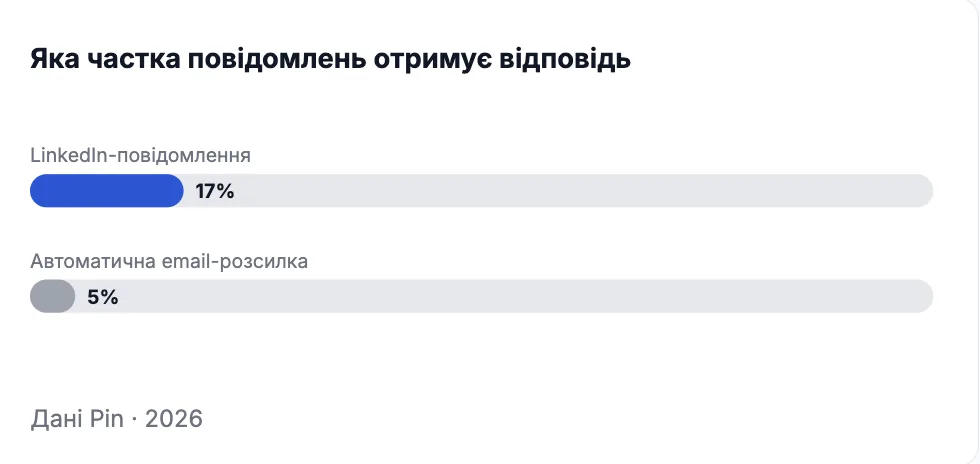
What share of messages get a reply
Pin data · 2026
The same logic applies when you're the one reaching out. Three things that genuinely move the needle on getting a reply:
- Keep it short. Two or three sentences, no long intro with your whole backstory.
- A specific reason you're messaging this particular person. Their article, a company project, a role you saw. Not "I'd love to connect," but "I saw your post about…"
- One clear, easy-to-act-on ask. Answering a single question — not a vague "can we chat?" with no details.
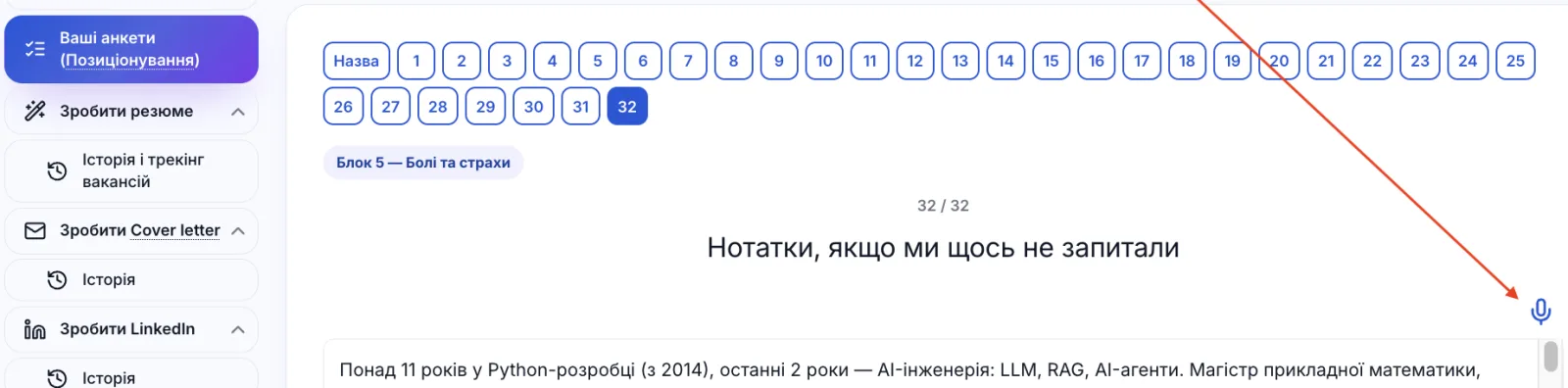
But no matter how targeted your message is, the recruiter will still open your profile. And the first few seconds decide everything: is it instantly clear what role and level you're aiming for? On the COScafe platform, your LinkedIn profile is built from a positioning questionnaire in just a few minutes. In the Positioning questionnaire you can simply answer by voice — all for your convenience. Updating your profile is just as quick — and LinkedIn ranks fresh profiles higher in search.
What to do once your connection request is accepted
An accepted connection isn't a conversation yet. Two rules separate a network that works for you from a contact list that stays silent.
Don't ask right away. Your first message after the request is accepted shouldn't be "do you have any roles for me" — it should be something that gives the person a reason to reply: a thoughtful question about their work, a comment on their post, a reaction to company news.
Keep track. When you're messaging recruiters and applying to roles at dozens of companies at once, it's easy to lose track of where you've already applied and which CV you sent. On the Unlimited and Lifetime plans, COScafe's job tracker saves all of this automatically — you can see when and where you applied and which CV you sent, so you never have to start from scratch. Every CV in your history can be downloaded instantly as a PDF or Word file — whichever the company asks for.
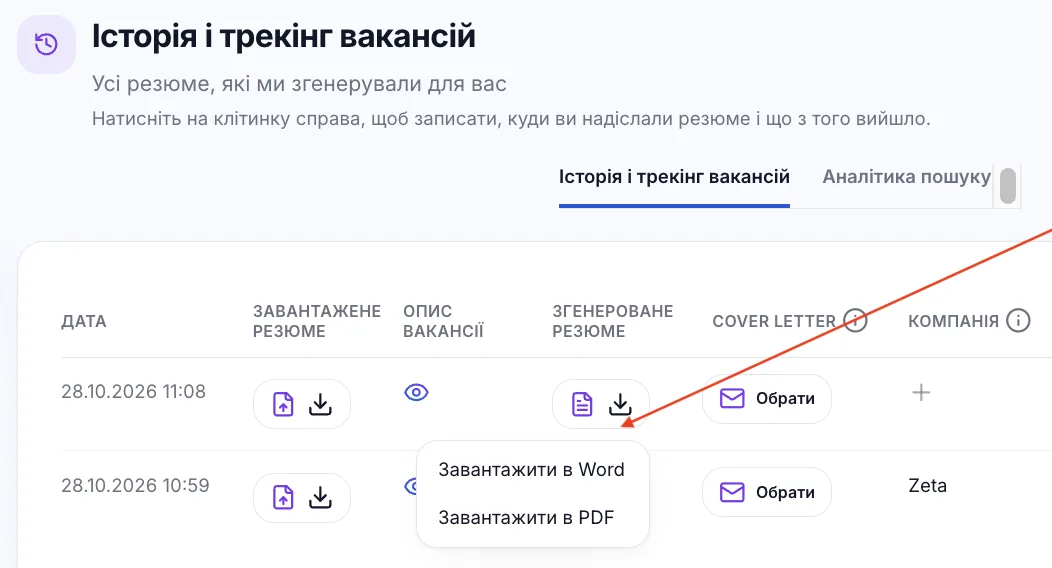
Job history: every generated CV can be downloaded as Word or PDF
When your network starts working for you
I've received an offer twice through my LinkedIn profile alone.
Both times, the conversation started long before there was an actual opening.
Picture the usual scenario flipped around: instead of an application queue, a message saying "we looked at your profile and would love to invite you for a call." Getting there takes more than knowing how to write that first message — it means knowing who to message and when, how to negotiate salary, and what to do when there's no reply for weeks. That's exactly what the 5 career strategy workshops on the COScafe platform cover — available on the Unlimited and Lifetime plans, from first contact to the offer conversation.
Questions about networking and LinkedIn
Can I message a recruiter if the role is already filled?
Yes. If your profile and experience are a fit for the company, a recruiter is more likely to keep a strong candidate in mind for later than to forget about them entirely. The key is to message with substance, not just ask to be considered "for anything."
How many messages does it take for networking to start paying off?
Fewer than you'd think. According to Pin, the average reply rate on LinkedIn messages is 17% — so roughly one in six replies. You can see your first results after messaging a dozen people, not hundreds.
Does networking work if I have few LinkedIn connections?
Yes, as long as your message is targeted: who exactly you're reaching out to and why. A profile that instantly shows your level and focus helps even with a small network — the recruiter sees enough to reply. The network itself matters too: the wider it is, the better your chances of being a second-degree connection for a recruiter and showing up in their search. So it's worth accepting relevant connection requests while you send out your targeted messages.
What should I do if a connection request or message goes unanswered for weeks?
One low-key follow-up after 1–2 weeks is fine. If it's still silent after that, it's better to move on to another contact than to message a third time — that rarely changes the outcome.
Read also: LinkedIn profile for an IT specialist, How to find a job through LinkedIn, and Why you're not getting responses to your CV.