Where to apply, what to put on your CV, and how not to lose track of your own search.
How do you look for an IT job in 2026 without hitting week six with zero replies? You've sent off a dozen applications, gotten a few "Sorry, but we've decided to move forward with another candidate" emails, and you can no longer remember which CV went where. Sound familiar? According to a DOU survey, the median IT job search in Ukraine takes 11 weeks and about 15 applications, so this is a normal distance to cover. Below are 6 steps worth starting with.
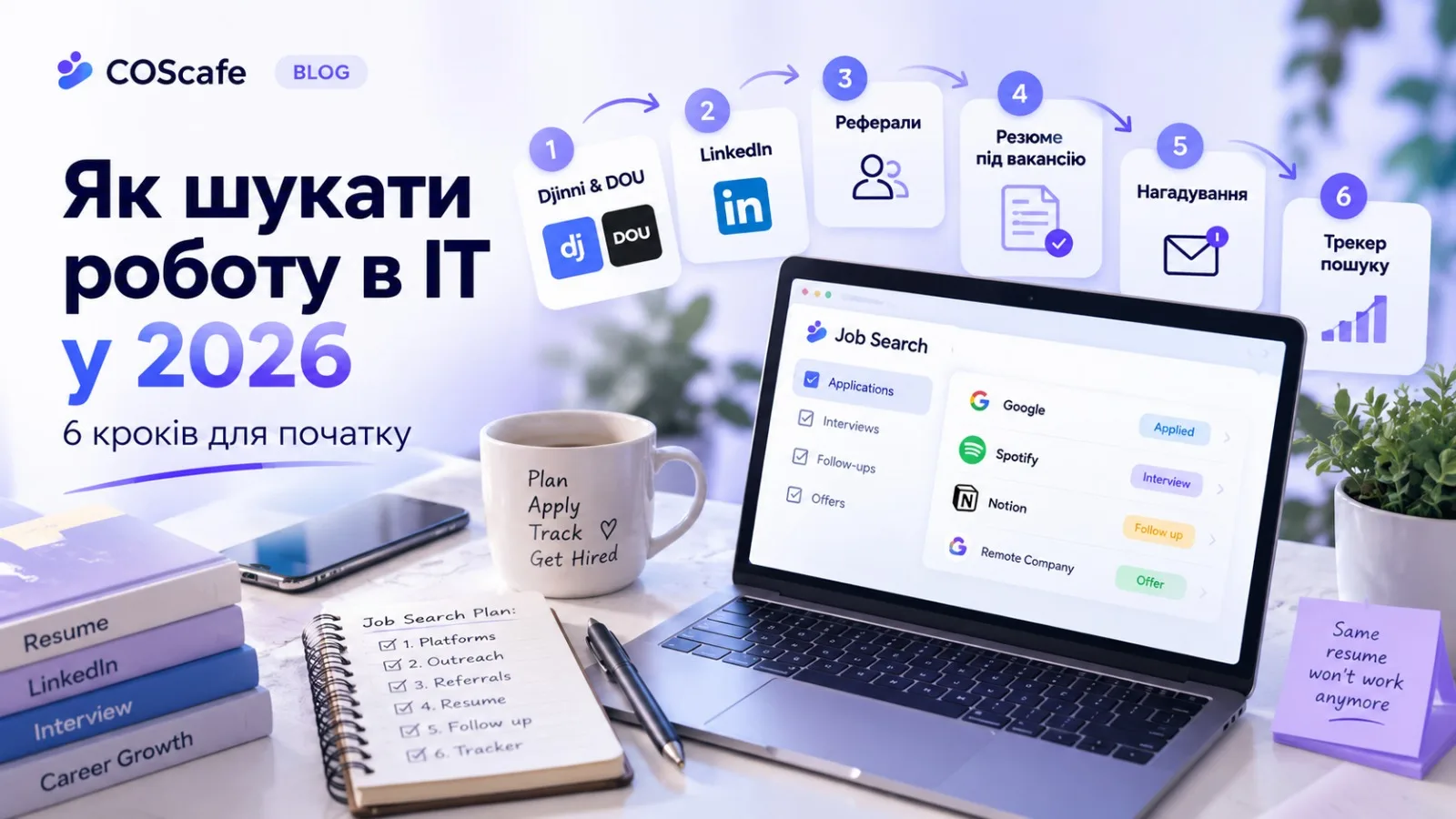
How to look for an IT job: 6 steps to get started
First, a quick look at where candidates in Ukraine actually land their offers. The steps below follow from this.
-
Niche platforms first: Djinni and DOU
Start your day where there are plenty of openings and less competition for each position than on the general job boards.
-
LinkedIn: message people
Find the recruiter or the future team lead and send two sentences on how you're a fit for that specific role. This works better than an application lost in the general pile.
-
Referrals
A quarter of candidates used referrals, and 15% of hires came from exactly there. Message three former colleagues: "I'm looking for a role like this — have you heard of anything?" It's five minutes.
-
A separate CV for every job
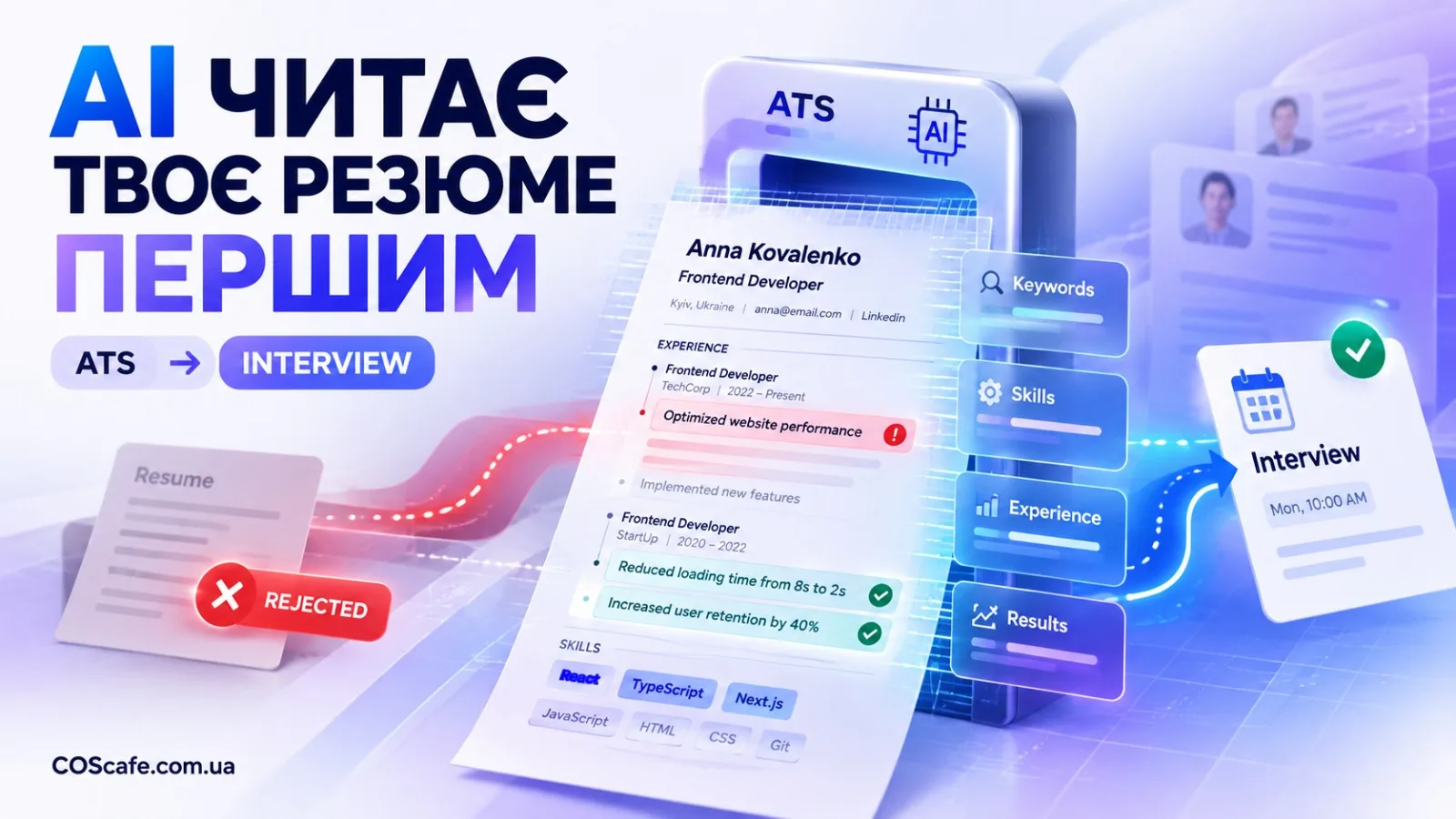
97.4% of large companies use an ATS, and 76.4% of recruiters search for candidates by the skills listed in the job posting. A one-size-fits-all CV usually ends with the same "Sorry, but..." The structure that gets past an ATS is broken down in "A CV for IT in 2026: an Example Structure That Passes the ATS".
-
Follow up after 3–4 days
One short note to the recruiter after applying or interviewing: what caught your interest and what you're happy to clarify. Most candidates never do this.
-
A tracker: where, when, and with which CV
The search drags on for months, and your memory starts failing by week three. For each opening, jot down the company, the date, the CV version, and the next step. That way you can see which CV is working and which isn't.
This is just the start of the search. Where to go from here, which other channels to add, and how to prepare for interviews — we cover all of that in detail in the lessons inside COScafe. For now, take the first step today, and think about where your salary expectations sit in advance, not at week six with no replies.
How AI is changing hiring: what the research says
Interviewing with a bot: where to expect it and what to do about it
In "The Rise of the AI Interviewers" (July 2026), SHRM notes that AI interviewers are catching on most where companies hire a lot of people at once: entry-level roles, campus recruiting, first career positions. For mid-level and senior IT roles, this format is probably less common. According to SHRM, candidates generally don't reject these interviews. CNBC, on the other hand, reports that some people drop out of the process and add the company to their personal blacklist. The sources disagree, so the call is yours.
If you're offered an interview with a bot, first ask who will review the recording and what happens after it. How the company answers tells you a lot about it too. If it's a company you really want, prepare two or three project stories of about two minutes each and practice answering to the camera. You'll find sample questions in the "Interview" workshop in COScafe and in "Sample Interview Questions, the Job Market, and Building a Career Strategy From Scratch".
Automation can screen out the right candidate
It sounds like a lot of work: one job, one CV. That's exactly where COScafe helps: on the platform, a CV tailored to a specific job comes together in a minute, and you can start with a free analysis of your current CV. We walked through how this works in practice in the stream "How to Build a Competitive CV."
And what actually happens to your CV after you hit "Apply" is broken down in a new article on DOU: "What Really Happens to Your CV After the Apply Button". You can ask your questions in our Telegram community.
And what happens when you have to look for a job again in two years?
Fall 2028. The company has changed its strategy, your team has been cut, or you just want something bigger. You open your laptop and realize: the CV that helped last time is sitting somewhere in your Downloads folder as final_v7. Which version went to that company where you almost reached an offer? Who did you message on LinkedIn? How did you answer the salary question?
Usually every search starts from a blank page. That's exactly why Lifetime exists in COScafe: one payment, and all your CVs, cover letters, LinkedIn profile, and job tracker live on the platform and never disappear. A year from now or five years from now, you log in and it's all still there: what you sent, where, and with what result. Alongside it are 5 lessons on building a career strategy, including interviews and 8+ job-search strategies. New platform features unlock for you automatically, at no extra cost.
🎯 Challenge of the week
Take the quiz "What's Really Holding Back Your Search for a Higher-Paying Job?". Then open one job you like and move five words from its description that match your experience into your CV. It's five minutes.
Frequently asked questions about the IT job search
How long does an IT job search take in 2026?
According to the survey, the median in Ukraine is 11 weeks, with an average of 15. Candidates searching abroad spend 18 weeks on average.
Where do you look for an IT job in Ukraine?
According to the survey, the most hires come from LinkedIn (25%), Djinni (21%), DOU (20%), and referrals (15%). A combination of several channels works best. More on this in the "8+ Job-Search Strategies" workshop in COScafe.
How many applications do you need to send?
The median in Ukraine is about 15 applications for the whole search, with an average of 35. The quality of the application matters more than the quantity: a CV tailored to the job, a short note, a follow-up.
What should you do if you're offered an AI interview?
First, ask who will review the recording and what happens after it. If it's a company you really want, prepare two or three project stories of about two minutes each and practice answering to the camera.
Source of the statistics on the job search in Ukraine: DOU survey, 2026.